






Vol. 3 Anchoring
Secrets of
Anchoring Systems
A modern guide to a very old craft.
An Introductory Anchoring Guide for Recreational Vessels
Andrew Buckley
Executive Chairman
A practical, informed and advisory guide, prepared by Muir Engineering of Tasmania, Australia.
The anchor forms an integral part of our maritime history, and the anchoring of vessels has been practiced for as long as humans have been boating.
This guide is based on the advice and opinions of experienced Australian boaters and yachtsmen from all over the country.
In particular, Muir wishes to recognize the contribution of our founder, John Muir, who is to all intents and purposes, the founder of modern anchoring in Australia.
Anchoring can and should be easy.
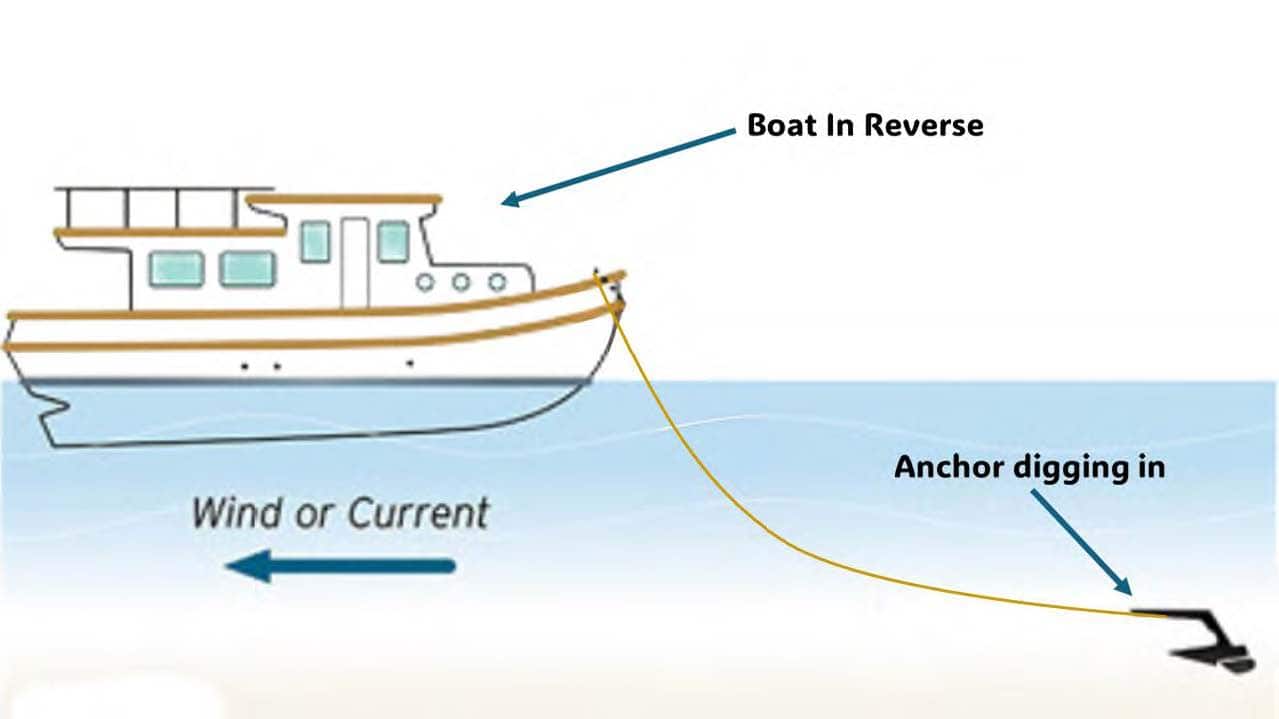
If you have reasonable knowledge and experience, you can motor into a familiar protected anchorage, drop the anchor, back off paying out sufficient chain, then go astern again to set the anchor, turn off your engines, and relax.
However,
Anchoring can be difficult and stressful if you don’t pay attention to all the factors that contribute to safe anchoring. To be securely anchored at the end of the day is always a great reassurance and offers the promise of a restful night. You don’t want to wake up in the middle of the night and find that you are dragging your anchor towards the rocks!

Table of Contents
Basic Principles of Anchoring
The fundamental principle of anchoring is that the loads on your boat caused by wind and currents are transferred via your anchor chain or rope to the anchor, which resists those loads by being dragged into the soft sea bottom so that it buries itself, whereupon the design of the anchor flukes transfers the load to the seabed.
Everything in this guide, and in your approach to anchoring your craft, is about making sure that the anchor is securely buried into the seabed and doesn’t pull out or drag, causing your boat to drift potentially into danger.
I: CHOOSING YOUR ANCHORAGE
STEP 1
Seek information from your charts and/or your GPS plotter.
Before choosing your anchorage consider the available locations as represented on your charts or plotter. Consider the following issues:
- The protection from wind, swell & surge all depend on fetch (see glossary) and wind direction. Look for a spot protected from the prevailing wind.
- Think about bottom conditions-Is it sandy, muddy, rocky? Is there sea grass, coral or kelp? The state of the ground below is very important in terms of getting a hold with your anchor.
- Depth under the keel is key, especially in some Australian locations where tide can be up to 6 meters or more. Make sure you know where the tide cycle is when you are anchoring. Swing room to clear sandbars, reefs and beds of kelp etc. is important and these features can also represent dangers for anchoring as noted above.
- Open anchorages and channels can have strong tidal currents which must be considered. If you are long way from shore, the lack of protection from wind and waves offer little comfort.
- Small, snug anchorages can be good but beware of crowded and tight anchorages near population centres.
- Remember the age-old rule of anchoring is first in, best dressed. You will be the one having to move if you anchor too close to other boats, or if you are up wind/tide and drag your anchor. Also beware of fixed moorings which don’t move like anchored boats.
STEP 2
Consider The Bottom and Location (again!).
Further to point 1 above think about your bottom conditions and location as follows:
- Depth and contour must be reviewed. Steeply sloping or shelving bottoms are difficult with one anchor, especially in terms of the applicable depth, and where your anchor may actually end up.
- The nature of bottom is very important. Hard sand, thick weed, thin mud with underlying rock or gravel may each demand a change of anchor, or if no suitable anchor is available, a relocation.
- Choice of anchor is important. A big sharp anchor for kelp like a delta, grapnel, or maybe a plow, is good. A Danforth is adequate for sand, and a grapnel is good for coral or rock. For normal desirable conditions, including sand and mud etc., a Bruce or Ray anchor is good.
- Watch out for foul ground with sunken moorings, wrecks and rubbish near population center or large rocks anywhere that rattle the chain and may need a tripping line (attached to the front of the anchor) to pull it out in case of a jam. Also watch out for coral bommies around which one’s chain can easily get wrapped. When retrieving the anchor, it is useful if you can be aware of where the chain is lying, which makes it easier to drive your boat towards the anchor and around obstacles.
- If you need to go ashore, consider landing points. Beaches may offer dinghy landing, albeit that you need to watch waves bashing the dinghy on the beach. Lots of vegetation and mangroves can mean insects.
- Other hazards include large mooring buoys, and submarine cables. Avoid getting your anchor fouled on these!
- Approaching your anchorage is better in daylight but cannot always be achieved. Sometimes night approach can help with visibility of navigation aids.
- If approaching at night, keep lights inside your boat to a minimum because lights on will kill your night vision. Trust your instruments.
STEP 3
Charts and GPS
The value of good, up to date charts (both physical and GPS) cannot be underestimated:
- Check that you have the charts for the area you are visiting and that they have been updated and show detailed survey.
- Make sure the scale you are using is sufficiently large to see all hazards. Many boating accidents are caused by viewing charts or GPS screens at inappropriate scales where problems may not be easily identified.
- Cruising guides are often available for boating around many areas of the Australian coast and overseas, and these are invaluable for detailing the best anchorages, often with pictures and detail not shown on the GPS or charts.
- While good charts and maps are expensive, they are worth their weight in gold! Don’t get fooled by cheap inadequate charts – always buy the professional product.
STEP 4
Other Information
1. NOTICES TO MARINERS
Notices to mariners can be important and can often be found on the coast guard radio around the area you are in. They may give the only warning of a still uncompleted submerged breakwater, a sunken or drifting vessel. They may also give the only notice of altered lead-lights. Often these notices are more up-to-date than any version of your charts, and also cover transient events.
2. LOCAL KNOWLEDGE
Warnings of poor holding, or unsuspected dangers should always be heeded. If in doubt, ask other skippers anchored at the location.
3. CRUISING GUIDES
As mentioned above cruising guidebooks are often available especially for well-known cruising grounds. Muir recommends purchasing these (if available) for every area you are visiting.
4. TIDE TABLES
Up-to-date charts are important but so are up to date tide tables. Consider holding a tide book on board in case your GPS info fails or is not up-to-date. Check tide times on-line prior to departure if you know you won’t have internet coverage. Sometimes GPS plotters also give tide information.
5. WEATHER FORECASTS
Perhaps the most important thing is to understand the weather conditions you are facing. Screen shot the weather for the next few days if you are heading out of internet range. Listen often to radio weather updates. The conditions will often prompt the decision to seek out a suitable anchorage and are a major consideration in which anchorage to go to, and, of course, when deciding whether to depart port. Only choose a leeward shore if a weather change is confidently expected. Known prevailing weather patterns should help decide the area and timing of cruising plans. Be prepared to move if the weather changes unexpectedly.
II: EQUIPMENT-ANCHORS & ANCHOR LINES
It is considered important to choose your anchor and your anchor line (chain, wire or rope) to suit the conditions you will face. There are many different types of anchors, and you cannot, realistically, hold all types on board. Therefore, it’s important to consider where you are going and what likely conditions you will face.
ANCHORS
There are many tables available from the anchor manufacturers to help you choose the appropriate anchor for length, displacement and windage of your boat, and for the nature of bottom you are likely to encounter. Buy the largest and heaviest anchor that the boat, the anchor winch and the crew can handle. Buy the best quality, well-referenced anchor you can find! Please note that anchor choice is a very personal matter and many people have differing views. Therefore, it should be a purchase that is well researched.
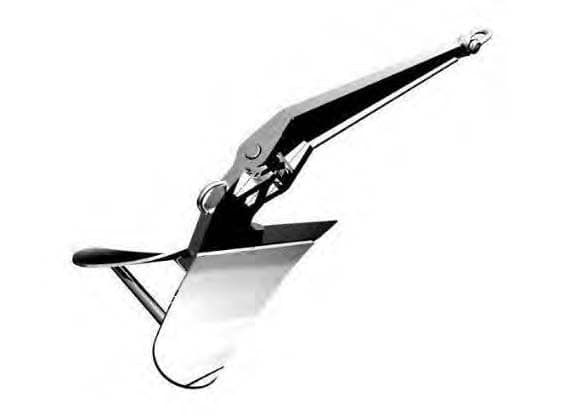
1. Genuine CQR
This would perhaps be considered the original modern anchor. Good holding power, and unlikely to foul with chain/rope. However, sometimes the CQR is hard to set and just bumps along over the bottom. It can also choke with weed. Some CQR ploughs are good but try before you buy a second-hand one. The length of the shank does seem important when it comes to setting the anchor and some overseas (no brands) have shorter shanks.
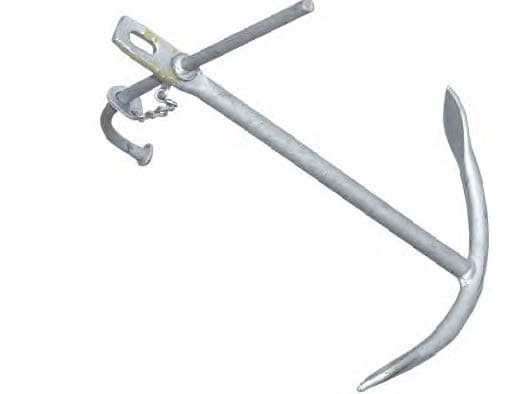
2. Fisherman (or Admiralty)
This is the oldest style of anchor, and design is not unlike what was carried on the wooden ships that mapped and explored Australia. Stowed on deck or lashed outside pulpit, it is a good back up anchor especially for kelp. 25 Kg is maximum to man-handle, but you can handle more with lifting gear.
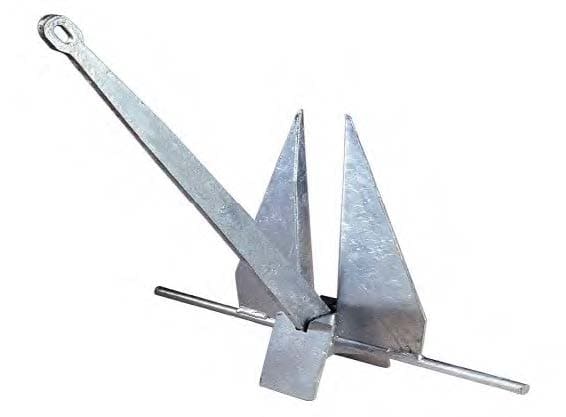
3. Danforth
A great sand anchor, and a small one can be useful for your dinghy. Can bounce along the bottom and can be choked by weed. Can be purchased in lighter aluminium styles good for back up.
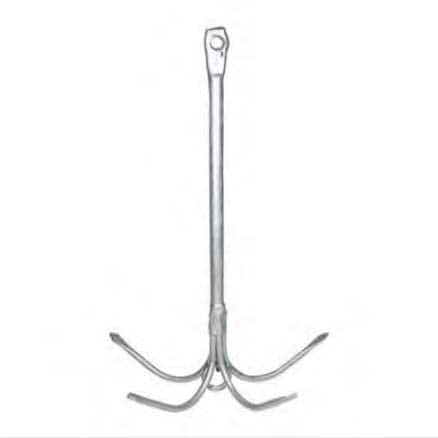
4. Grapnel
Grapnel anchors are required for rock and coral reefs. Folding versions are available. Might consider adding a tripping line to pull it off a reef. Some are designed to allow the fingers to bend when being retrieved.
5. Bruce
The Bruce or Ray anchor is one of the more modern designs and can work very well for good bottoms, sand mud and light gravel. May be dislodged by violent yawing. Also, can choke with weed.
6. Delta
Another modern style which is an alternative to the plow but with a fixed shank. Good holding in many conditions and sharp point helps penetrate some weed etc.
7. Modern Brands- High Holding Power
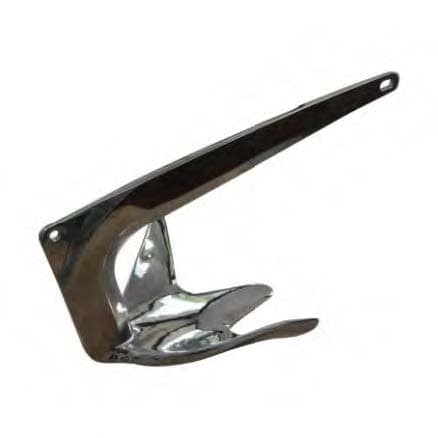
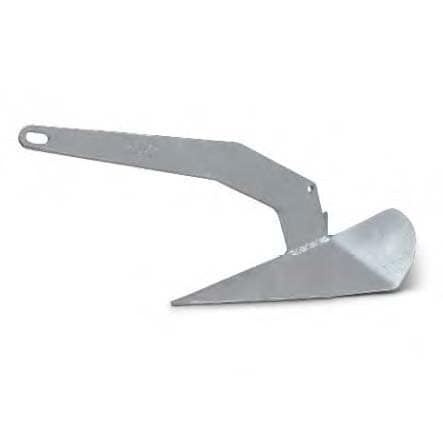
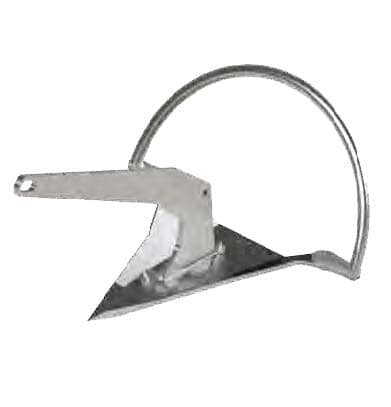
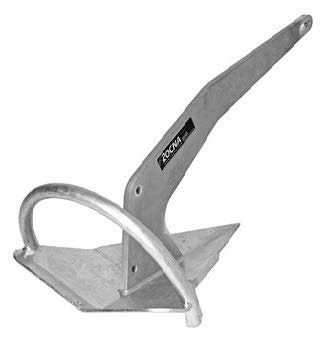
There are several modern brands of anchor available in Australia and other countries. Muir is partnered with the high quality Mantus Anchor design and strongly recommend them as the proven leader in smart design and high holding power. In addition, there are other anchors such as Ultra, Rocna, and Sarca, all of which claim high holding power for the size and weight of anchor. Most Boaters consider these to be excellent anchors, but generally a bit more expensive due to the intellectual property contained in the brand design.

ANCHOR LINES-CHAIN & ROPE
Once again you must consider the size and strength of the anchor chain or rope based on the size and displacement of your vessel. Larger and stronger is desirable unless weight is a consideration, such as in a racing yacht!
1. Chain
Most chain is imported these days but still seek out good quality and be prepared to pay a little more. Muir recommends chain for all larger recreational craft – probably anything above 12m in length. Stainless chain, while looking great when new, can suffer from work hardening and cracking. Muir recommends good quality galvanized chain, and we can advise on chain selection for your boat.
| ADVANTAGES | DISADVANTAGES |
|---|---|
|
|
Once again you must consider the size and strength of the anchor chain or rope based on the size and displacement of your vessel. Larger and stronger is desirable unless weight is a consideration, such as in a racing yacht!
2. Rope
Nylon, or polyester is preferred rather than Polypropylene for anchor lines. It is best to add a length of heavy chain from the anchor to help hold the anchor down. This chain would preferably be as long as your boat, or up to 1.5 times your boat length. Make sure you select a rope of the correct size and shape to work well in your gypsy.
| ADVANTAGES | DISADVANTAGES |
|---|---|
|
|
3. Additional Suggestions
- Mark rode clearly every 5 or 10 meters (colored paint, rawhide or colored cable ties).
- Bitter end (attachment of rode end to the boat) can be achieved by using a rope line or shackle from chain end (or tie rope) to a secure eyebolt mounted high in chain locker.
- Consider holding a Marker Buoy on a separate rope line, ready to go if necessary.
- Consider using a buoyed tripping line attached to the crown of the anchor if you are anchoring where there are a lot of snags, rocks, or reefs. Buoy should be marked “Anchor Tripper.’’
- Tripper line length preferably twice depth but monitor length to minimize chance of fouling the props.
4. Anchor Watches
Anchor Watches essential in some circumstances such as:
- In heavy weather
- In some exposed anchorages
- If holding is at all doubtful.
Another modern-day option is to set an anchor drag warning on your GPS plotter or it can also work on your phone. This works by setting an allowable distance from your anchor location beyond which, if your boat drags, a warning is issued.
III: ANCHORING TECHNIQUES
A.HOW TO ANCHOR
1. Consider all the information as discussed in Chapter 1 and select your anchoring location noting depth, swing room, bottom conditions and tide and wind direction (noting possible wind direction or tide changes overnight).
2. Note which direction other boats are lying or if there are no other boats, assess how, you will lie depending on wind and tide.
3. Approach your chosen anchoring site with the boat orientated how you expect it to lie, which is generally bow into the wind or tide or a combination of both.
4. Once in position, try and hold the boat steady while you lower the anchor. Once the anchor is on the bottom, edge the boat backwards while laying out additional chain or rope. You can usually tell when the anchor is on the bottom as the chain/rode will go “slack”.
5. The length of chain to be let out is at least 4 times the depth of water at the anchoring site at high tide. Add extra to cover height of the bow and rise in the tide. On some boats the depth sounder measures depth under the boat’s deepest point, in which case this dimension must also be added. For rope (and rope & chain) anchor line Muir suggests 5-6 times water depth at high tide.
6. Once the anchor is down and the chain or rope laid out, back the boat off a bit and firmly tug on the anchor to “set” it. You may find that the anchor initially gives a bit, but you should ultimately feel when the anchor grabs and stops the boat going backwards.
7. Once the anchor is set, survey your position and consider the swing room against the shore and other boats or hazards. Remember, “if in doubt, let it out” because more chain is better than less!
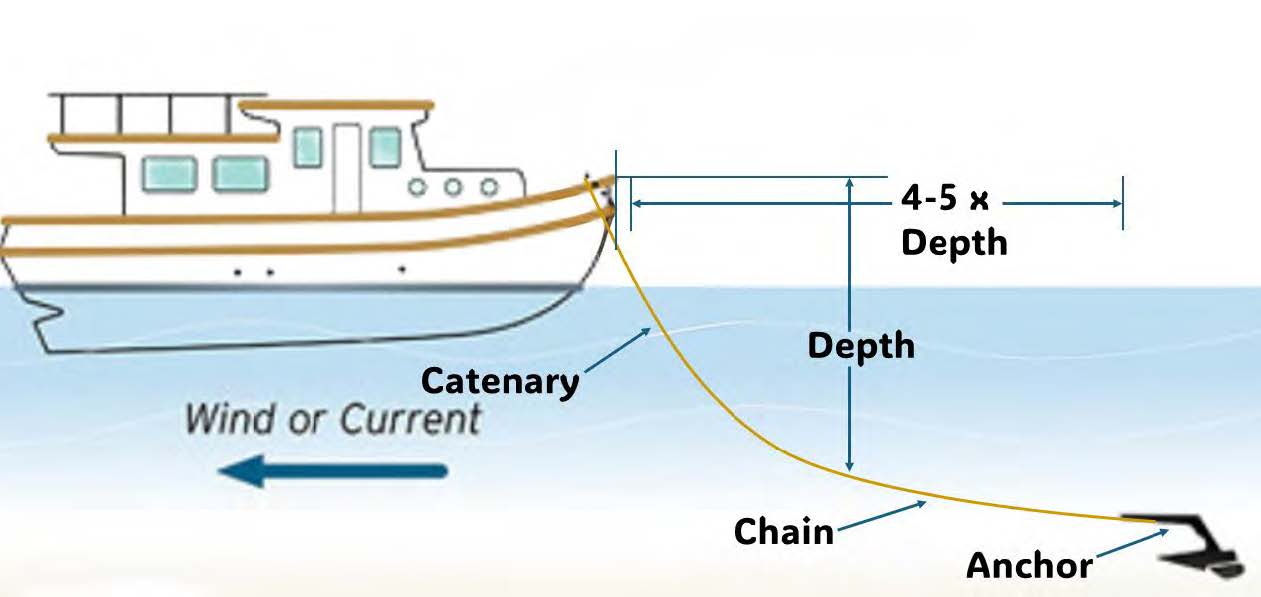
IMPORTANT NOTICE: In heavy breeze or tide, more lengths of rode may be required. “If in doubt, Let it out”.
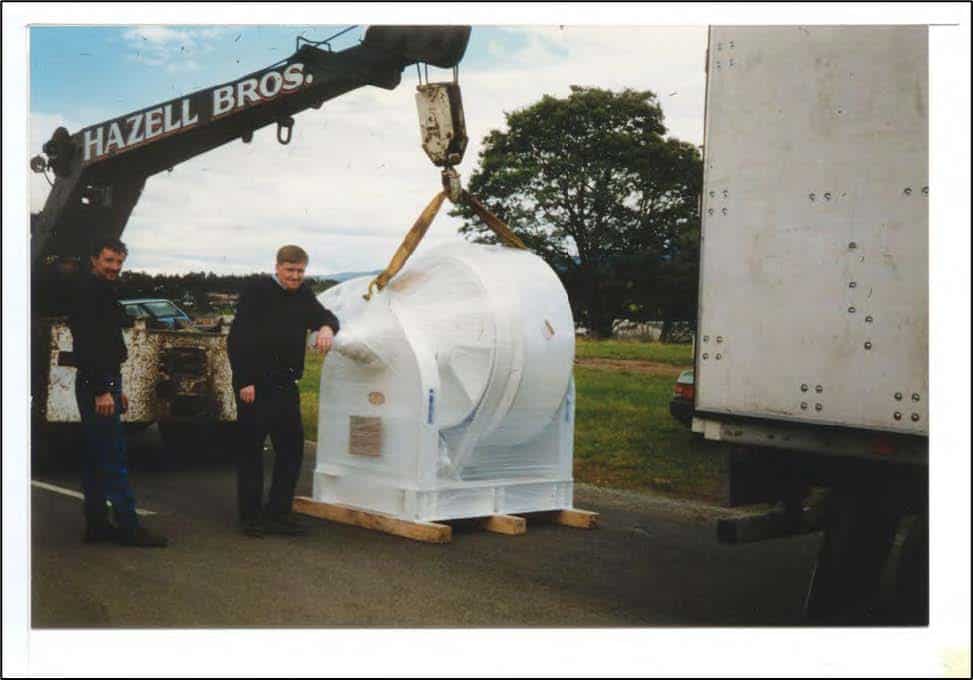
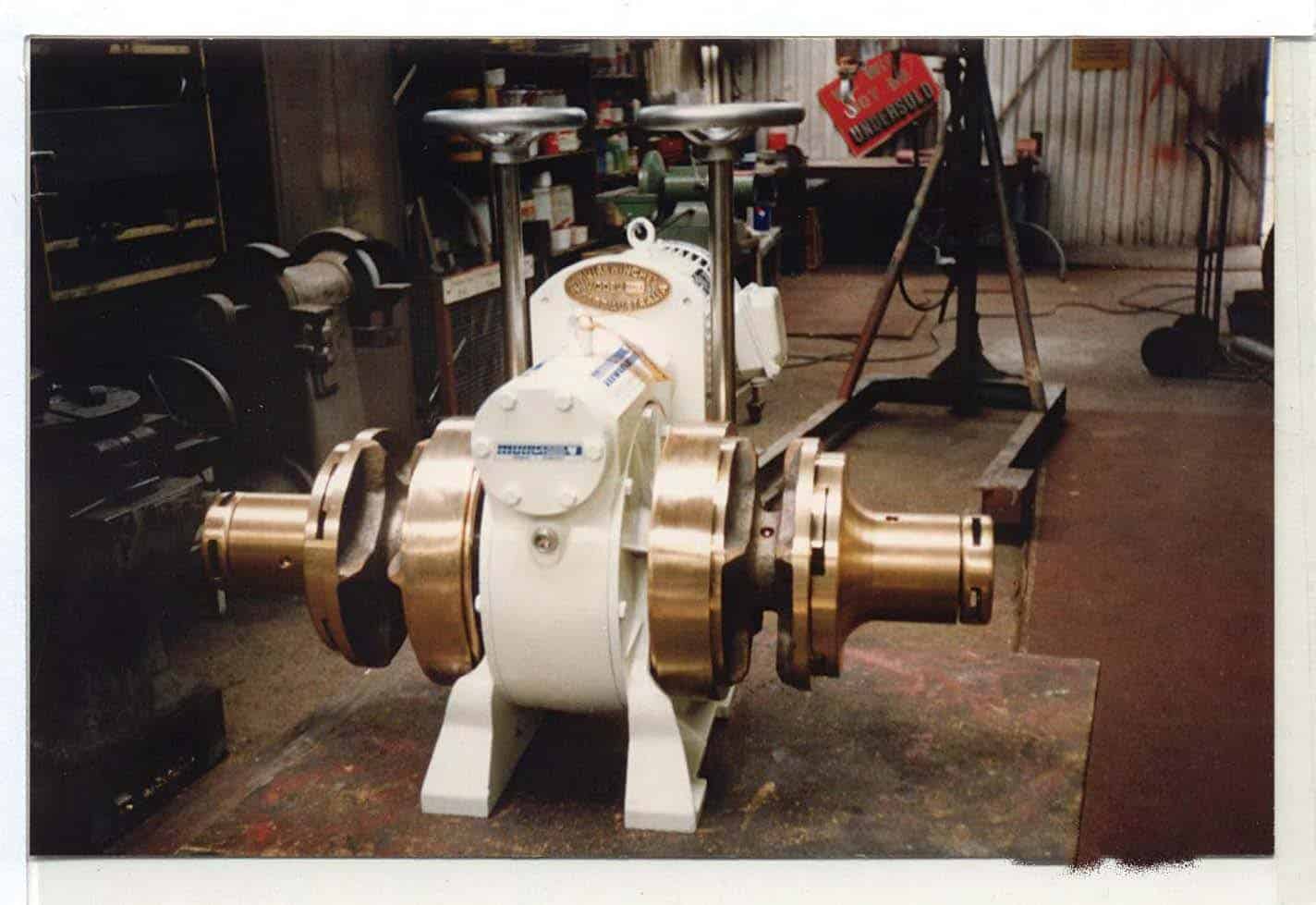
1990’s: Our largest Drum winch at the time, the SD 450, on its way to Austal Ships.
EXAMPLE CALCULATION OF THE LENGTH TO BE LET OUT
Depth under boat – 3 meters
Overall tide – 2 meters
Tide cycle – half tide i.e. 1 meter rise to high tide
Depth from surface to boat bottom (draft) – 1.5 meters
Height of bow roller above water surface – 1.5 meters
For calculating the length to be let out, first you need to calculate the overall depth, using the following formula:
Overall Depth(meter) = Depth under boat(meter) + Rise of Tide(meter)
Where,
Overall Depth = 3 + 1.5 + 1 = 5.5 meters
You can then calculate the length to be let out, using the following formula:
Length of chain(meter) = (Overall Depth(meter) * 4) + Bow Roller Height
Where,
Length of Chain = (5.5 * 4) + 2 = 24 meters
Or,
Length of rope(meter) = (Overall Depth(meter) * 5) + Bow Roller Height
Where,
Length of Rope = (5.5 * 5) + 2 = 29.5 meters
= 30 meters
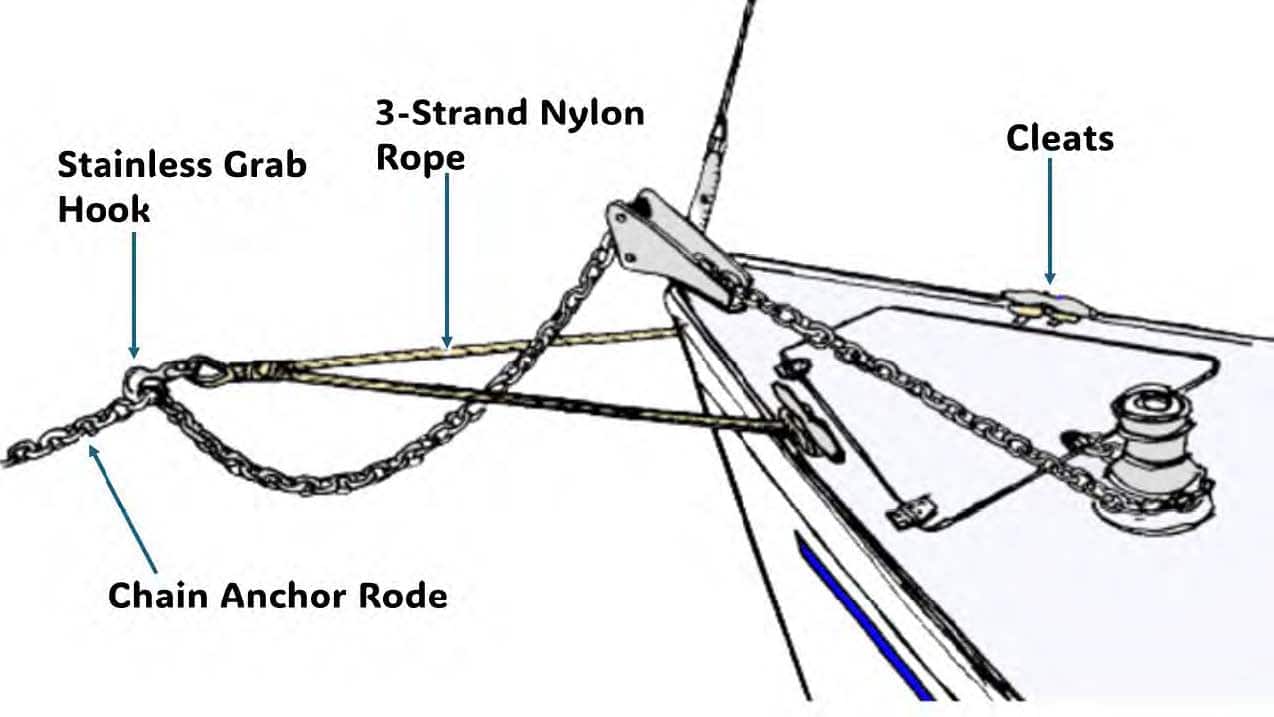
8. Once in position and location checked, fit your snubber or bridle (or chain lock) and unload the anchor winch or windlass. One suggestion is to fit both the bridle and the chain stopper as a back up.
Additional Information
There are many different snubber options but essentially the tasks of the snubber are to:
- Prevent anchoring loads from being transmitted to the anchor winch.
- Reduce jerking and clanging of the chain by transferring the load to a stretchier medium, probably stretchy rope.
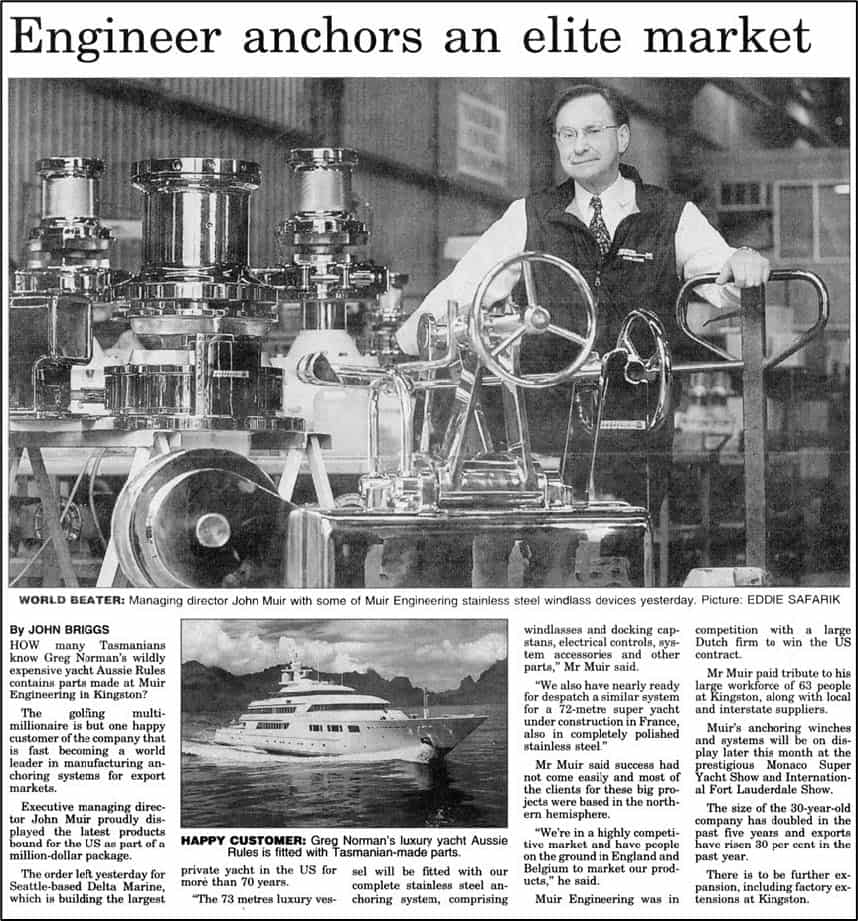
Early 2000s Muir flexes its muscles growing its market share of superyacht anchoring equipment.
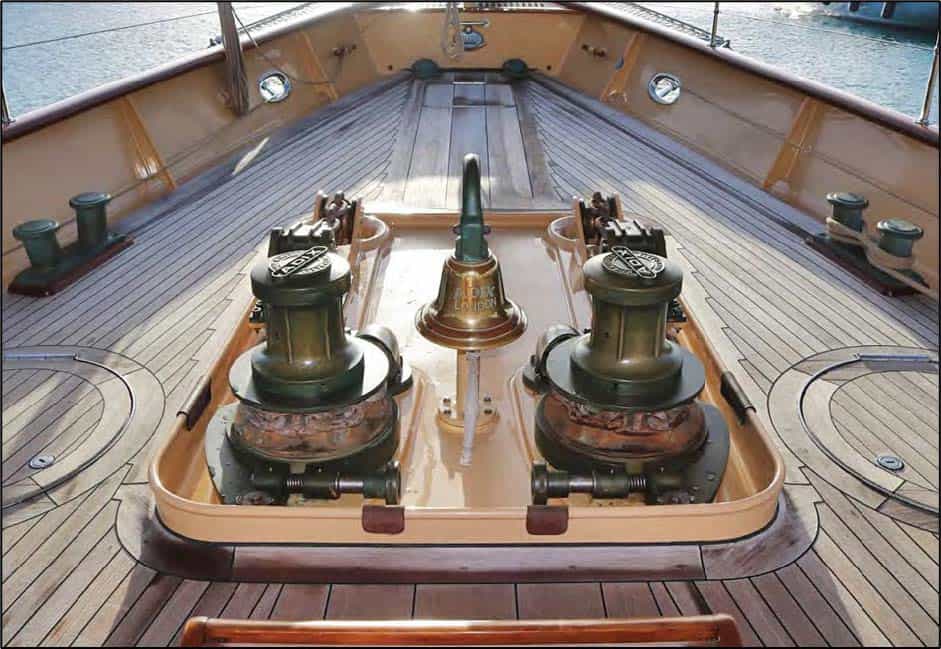
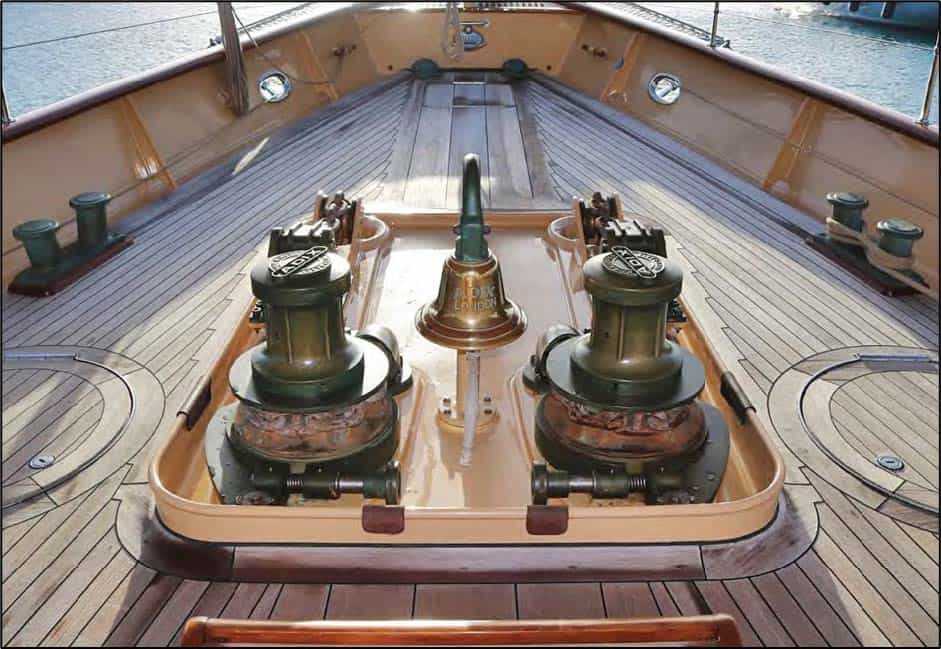
1997 (Photo in 2016): Sailing Yacht Adix's Aluminium Bronze Windlasses
B. SUMMARY STEP-BY-STEP SEQUENCE
- Boat Head to Wind, (or Tide!). Take way off (ie. Slow down and stop)
- Release anchor to touch bottom.
- Slowly astern easing out your anchor line (rode) to your calculated scope. (4 times depth + bow roller height)
- Try not to drag/skip anchor over bottom.
- Once calculated rode is out then stop.
- Allow a few minutes for anchor to settle.
- Go astern firmly (but not excessively) to set anchor.
- Fit bridle or snubber.
C. DETECTION OF DRAGGIING
One of the key things that helps maintain a safe anchoring experience is early detection of dragging. Keep a careful eye out when you are first anchored to ensure that your anchor is properly set. Options are to keep track of your position relative to other boats, or to take bearings to landmarks on shore to monitor your position. If you have a good GPS plotter you may be able to monitor your anchor at close to maximum magnification, simply by monitoring the movement of the boat using tracks. Depending on the conditions, it is worth getting up once or twice during the night to check what is happening.
Other indications to keep an eye on include the rode jerking, skipping and/or grumbling when setting. After setting, the boat lying beam onto wind is a potential warning sign. Changes in sounds, waves ceasing to slap the bow, and changes in depth under the boat are all possible indicators that something is wrong. Of course changing visual marks or bearings as above can be a sign but can also just indicate swinging or yawing.
Finally, if you have set up monitoring on your GPS plotter, an altered GPS or radar position can tell you that you are moving. One option I use is to leave my plotter running at night, fully magnified, and lay down a track. Then when you hop up to look during the night you can easily see if the boat is swinging within the arc as anchored or, it has started to drag away from the original location of the anchor.
Action to take if you are dragging… Let out much more scope (remember “if in doubt, let it out”). If that is unsuccessful, you may have to try resetting the anchor, and if you can’t, weigh anchor and try again to reset (maybe in a more favorable position with a better bottom such as sand if seen). And again, maybe let out more scope.
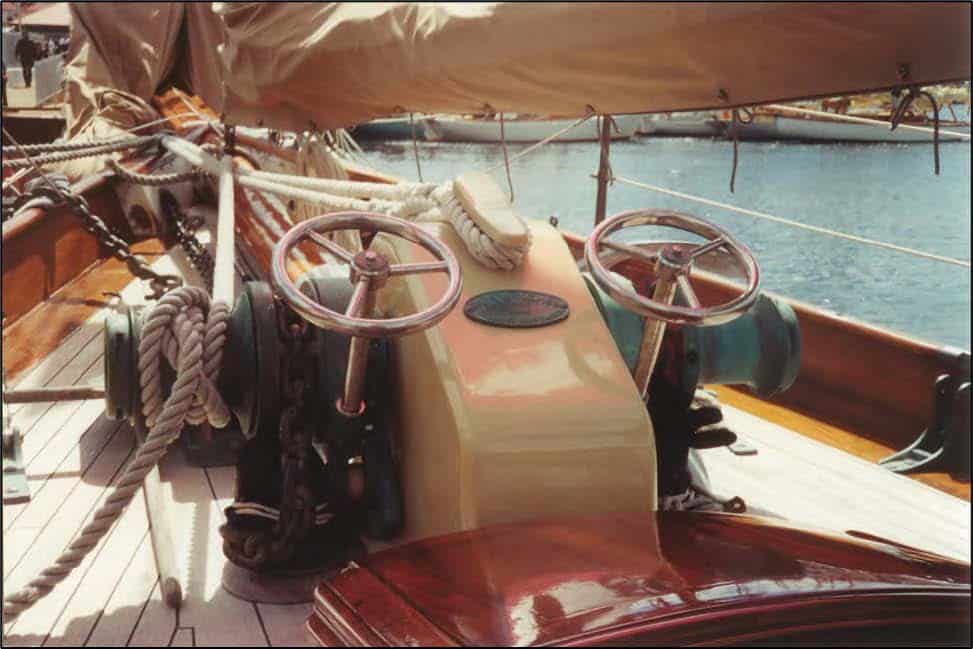
2001: Vintage HR8000 with bronze gypsies and capstans
D. SPECIAL SKILLS
1. Two Anchors
- It is possible to deploy two anchors over the bow if your boat and anchor winch are set up for this.
- Using two anchors can help reduce sailing around the anchor, with changing currents and yawing in strong winds, and can minimize your swinging circle.
- It also provides insurance against dragging a single anchor in severe conditions.
- Be careful as this can result in tangles if not properly deployed.
2. Stern Anchor
- A stern anchor can be used to hold your bow into the swell in an anchorage where the swell is not in line with the prevailing wind.
- You can also use a stern line to shore, and this is common in the Mediterranean in crowded bays and where rock wraps are used to protect the stern line from chafing.
- Drop your anchor further out in the bay and then back in towards the shore taking the stern line to shore with your dinghy!
STERN ANCHORING POSSIBLE PROCESS
- Deploy and set the bow anchor.
- Row out the stern anchor in the dinghy, or
- While underway, the stern anchor can be dropped with double scope.
- The bow anchor lowered
- Take up slack on stern scope when moving slowly astern.
- Generally, stern anchoring is not recommended in difficult conditions and severe weather.
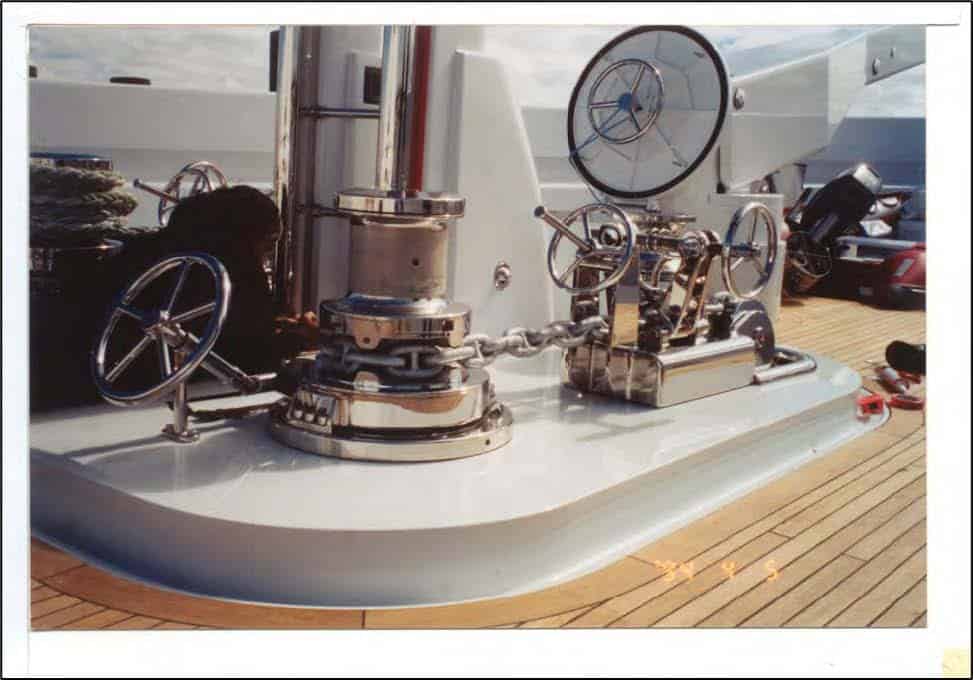
2003: VRC 18000s on board Greg Norman's Oceanfast superyacht
E. WEIGHING ANCHOR
- Remove your bridle or snubber.
- Start engines.
- Assess anchor location – beware if the anchor is underneath another boat.
- Raise stern anchor if deployed.
- Begin winching up the anchor chain or rope, ensuring that the boat is driven towards the anchor location, rather than pulled towards it by the winch.
- If anchor is stuck, drive the boat over the anchor slightly using the boat to dislodge the anchor,
- Weigh the anchor and stow it.
F. ANCHORING UNDER SAIL
SUGGESTED PROCEDURE
This process is easiest if there is no tidal stream, and boat handles well under main only.
- Clear foredeck.
- Check chain free to run and anchor ready to launch.
- Preliminary run over chosen anchor site.
- Final approach, enough speed to respond to helm. Approach just leeward of site, ease mainsheet to slow down.
- Let go anchor with main luffing.
- Steer to keep chain clear of bow.
- Once anchor on bottom, it should catch and drag out chain.
- Sheet in mainsheet in firmly, using boat speed to set anchor,
- The anchor digs in, stops the boat.
- Luff main and drop the sail. Check you are not dragging!
- Deploy snubber or bridle.
G. WEIGHING UNDER SAIL
- Release snubber.
- Assume you are lying head to the wind.
- Shorten up anchor chain if possible.
- Hoist main.
- Ease mainsheet a little.
- Begins sailing up to anchor, pulling in chain as you go.
- Each time strain comes on cable, the boat stalls and jerks around onto other tack.
- Once the boat falls off onto other tack, it should result in the strain going off the cable, and slack forms. Now haul in this bight of chain.
- Continue until anchor is up.
- Stow anchor.
H. SPECIAL ADVICE FOR CATAMARANS
It is strongly recommended to build a bridle of 2 equal length legs of nylon rope, each with a thimble, shackled to each bow.
Both bridle ropes are attached to the chain hook and stowed so that they can be attached to the chain from the bow once the anchor is deployed.
A long bridle adds elasticity and reduces compression loads on the fore-beam.

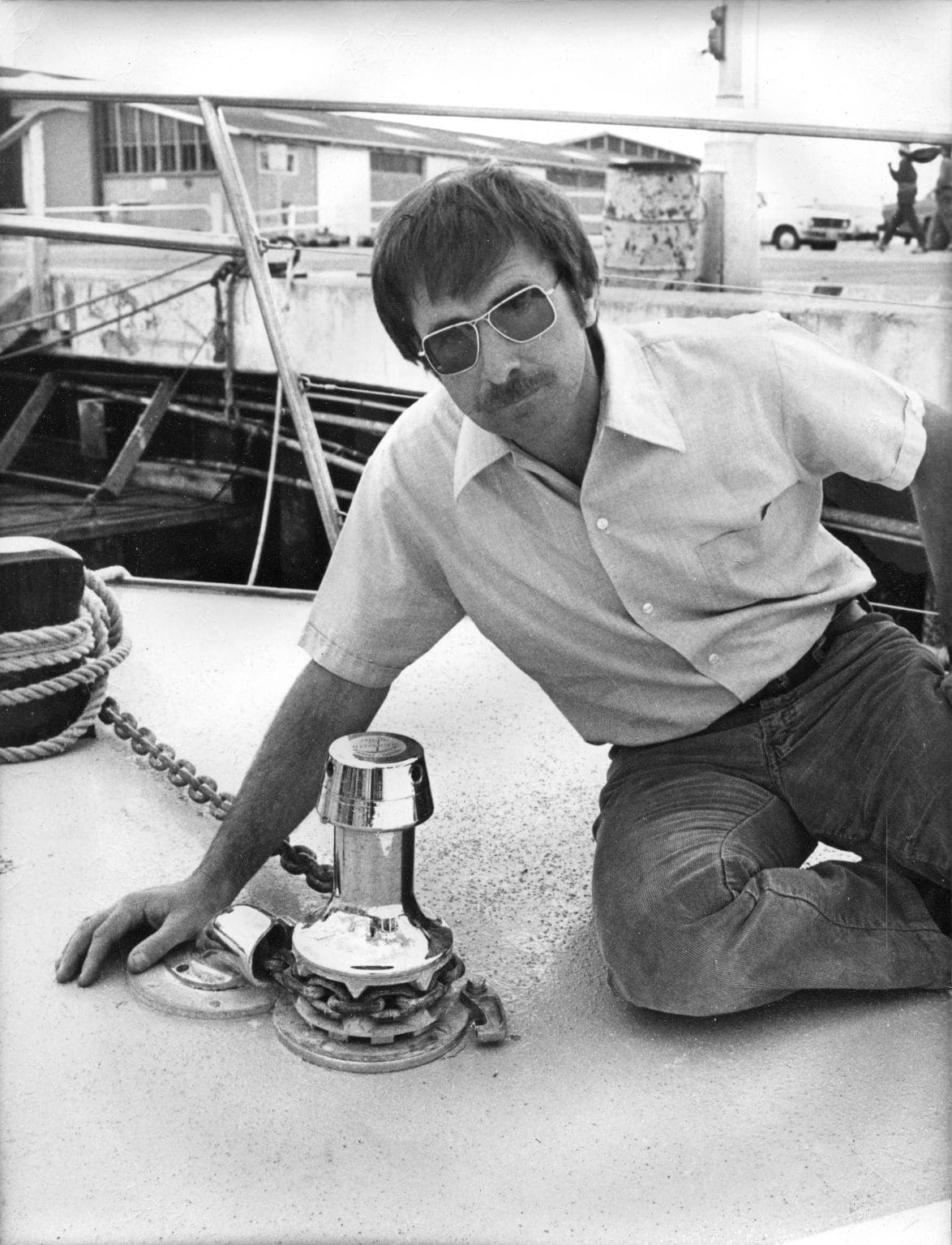
2000s John with a low profile VR8000 windlass
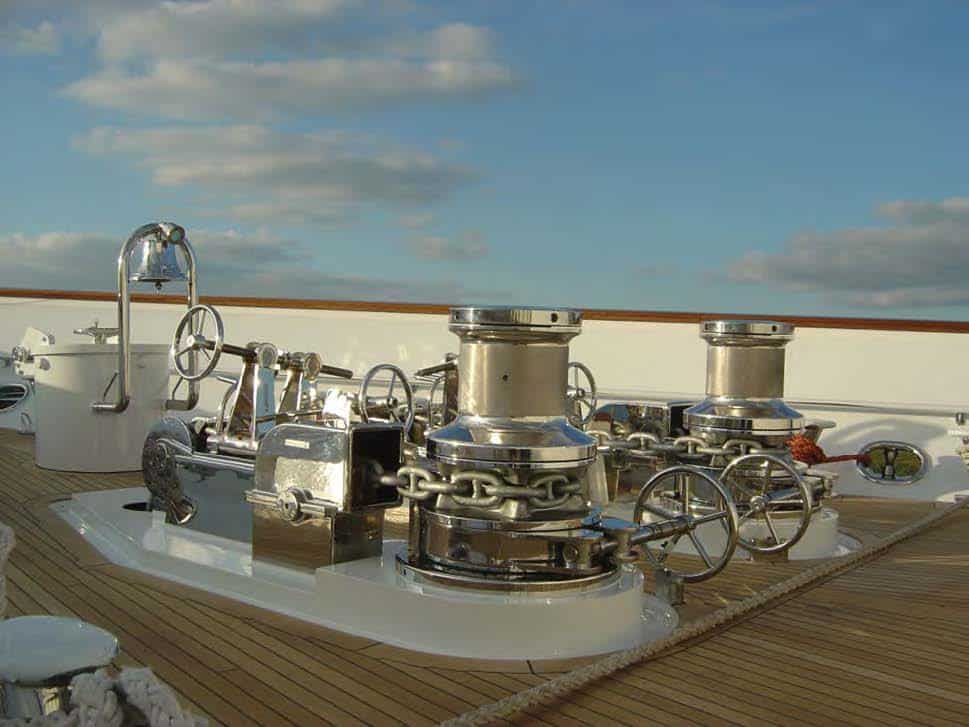
2005: VRC 20000s and Chain Compressors on board Feadship Rasselas
IV: ANCHOR WINCHES AND WINDLASSES
Design and Layout
The key to safe and simple operation of your anchoring deployment process is a strong, reliable, powered anchor winch. These days there are powered winches available for all size boats from a 5m tinny through to the largest mega yachts. Muir, located at Kingston in Tasmania, Australia, makes winches to suit all those vessels.
There are also small manual winches which are still much easier than hand hauling, but we recommend a powered winch if you have any sort of electrical system and batteries on your boat.
Power can be supplied by a DC supply of 12V, 24V or 48V. For super yachts and up, electric power is often 415V AC. For larger recreational vessels around 20 to 30m, sometimes the power can be provided by a hydraulic motor and power pack if required. Our strong suggestion is to buy a high quality, well-known brand anchor winch with stainless steel parts and high-quality motor and gearbox. Sometimes this costs more than the cheapest winch but when you need it to work as you are hanging off the rocks, the expense is worth it.
Remember John Muir’s words of wisdom!
“Ensure the length you design and build it stronger than the deck it’s bolted to”.

2005: Feadship Rasselas
Vertical Winch Configuration
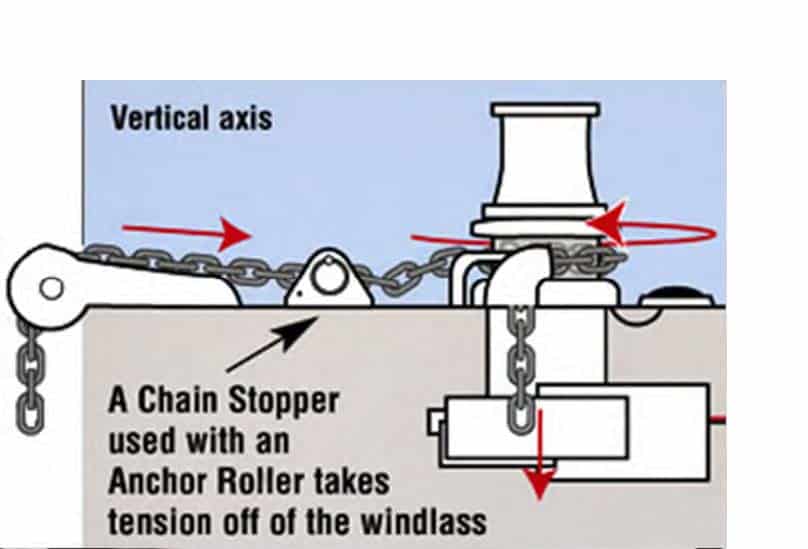
A vertical winch or windlass is one where the driving shaft is orientated vertically. Mostly with a vertical winch, the top works (the actual chain gypsy, capstan, and winch) are mounted above the deck, while the gearbox and motor are located underneath below deck.
This style of winch mostly results in a layout giving 180” chain wrap around the gypsy which ensures less skipping and better engagement. Low-profile models are available without a capstan, and these are less obtrusive.
Make sure your bow roller height gives chain entry at very near 90 degrees to the vertical shaft. Also, make sure you have sufficient chain fall to top of the chain stack in the chain locker (check with the manufacturer what you need for your size winch).
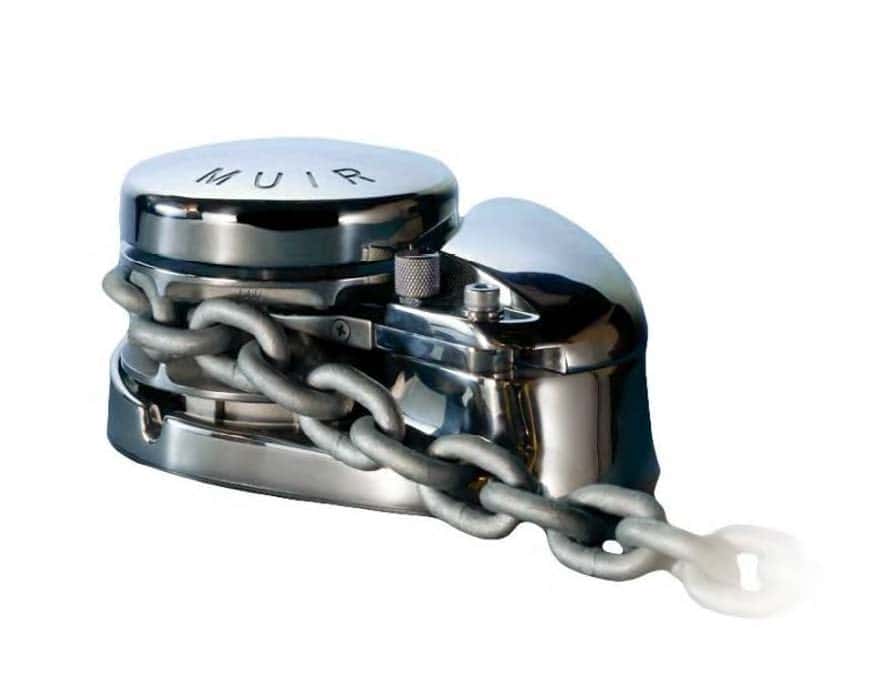
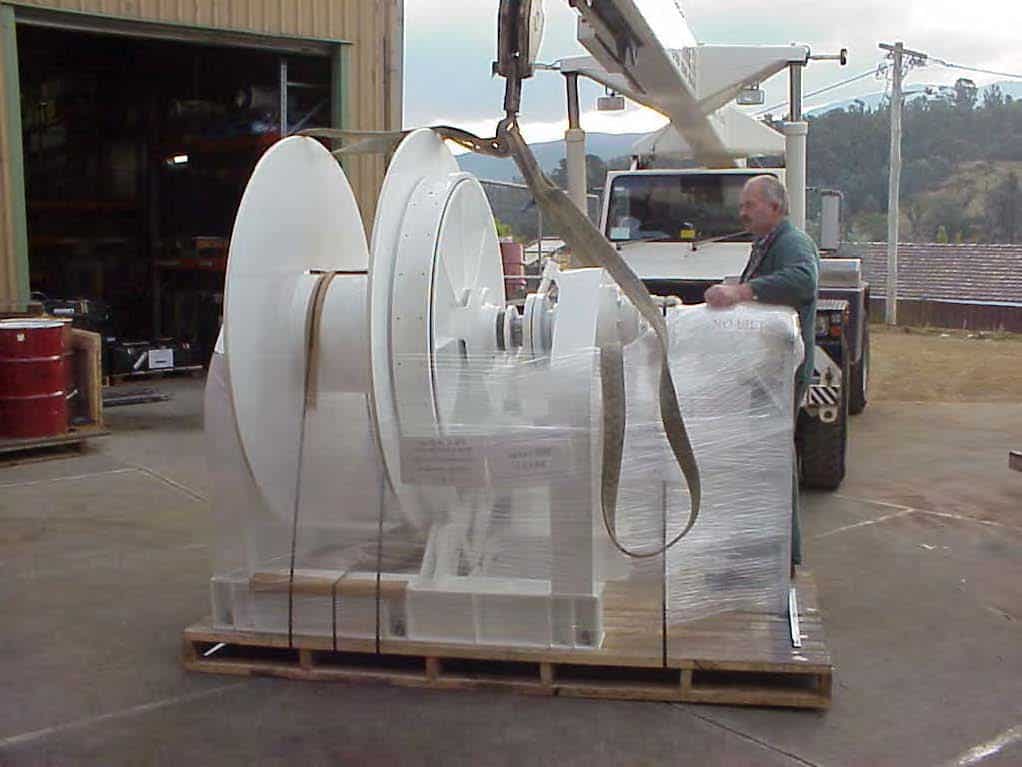
2000s Our largest Drum Winch ever, the SD6, bound for Austal Ships
Horizontal Winch Configuration
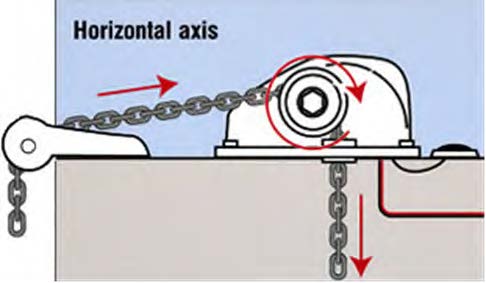
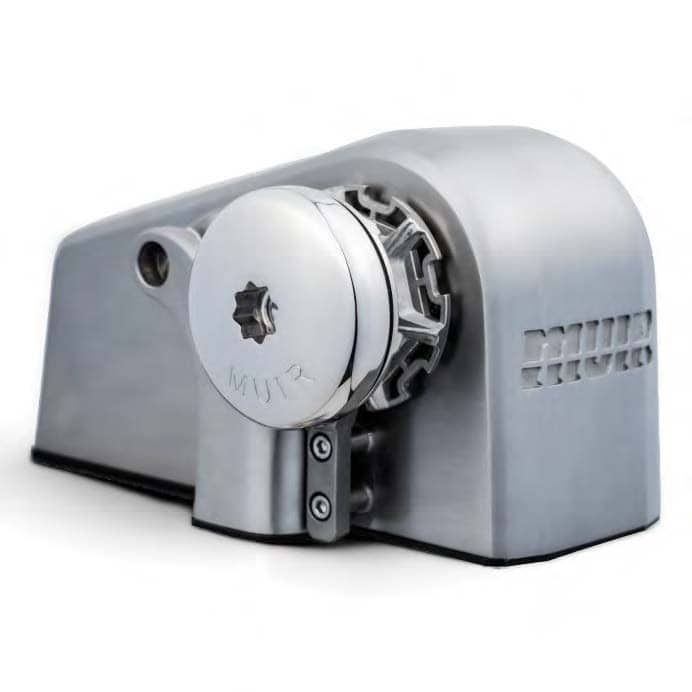
A horizontal winch has its drive shaft orientated horizontally. Generally, these winches are fully enclosed in a housing and mounted all above deck. This means fewer holes and more chain fall because the motor and gearbox are not in the chain locker.
The chain-wrap around a horizontal winch gypsy is generally only 90” (Muir recommends a minimum of 120 degrees), which can lead to increased skipping, so beware if your bow roller is high. Muir makes fairlead rollers to install between your winch and the bow roller to make sure you have sufficient wrap, as noted preferably 110 or 120 degrees.
These winches require less chain fall as noted above. A manual lever provides a very convenient manual retrieval system in the event of power failure.
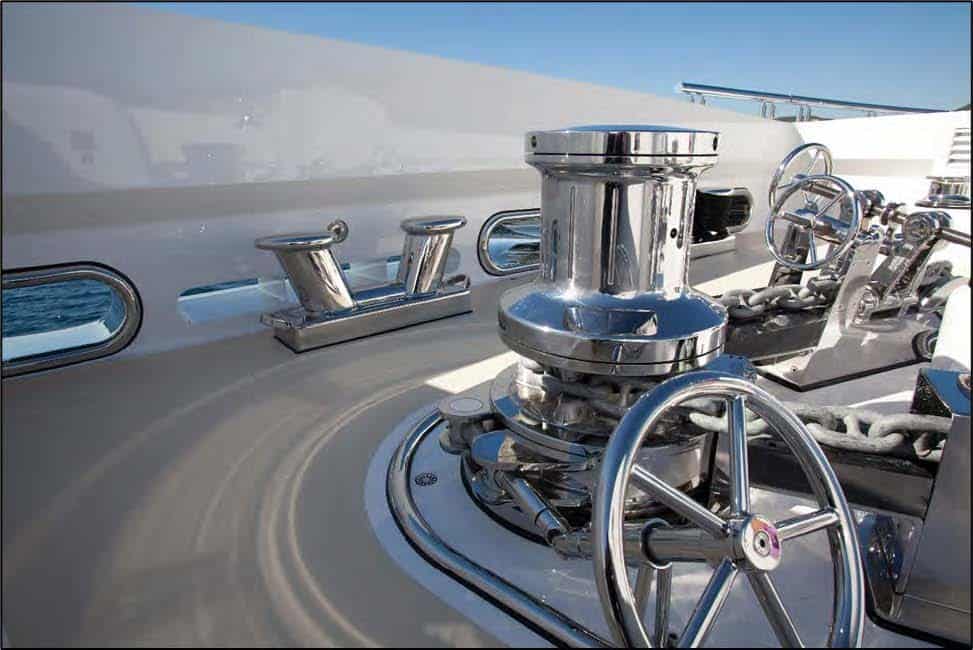
2009: VRC 20000sand custom angled Compressors on board Nobiskrug Sycara
Drum Winch
A drum winch is often used on smaller craft or catamarans where there is insufficient space for a decent chain locker with adequate fall. A drum winch winds up the rope and chains onto its own drum, thereby preventing the need for a chain locker. Sometimes the drum winch is mounted inside the foredeck anchor well, or just on the foredeck of the boat. Remember that saltwater coming over the foredeck will constantly impact on the winch and its life if preventative maintenance is not practiced regularly.

Windlass Position
When locating your vertical or horizontal winch make sure it is mounted over the deepest part of the chain locker so that chain free-fall is greatest and self-stowing. Mount the winch/windlass as far aft as possible to achieve this.
Installation
Make sure winch/windlass loads are well spread over deck and bulkheads. Muir recommends strengthening plates that are fitted under the deck to take the winch loads. Use a deck gasket normally provided with your winch and made from 3mm HDPE or other polymer. Try and seal the deck with Sikaflex so that water ingress around the winch is minimized. Footswitches should be placed to aid viewing rode all around the bow, yet to avoid being accidentally stepped on.
Make sure cables are sized correctly (and as large as is convenient) and locate the breaker where you can easily access it should it trip during winch operation. A solenoid is generally used to minimize cable size to and from your up/down switch.
Muir recommends you seek professional help with your winch installation project.
Key Parts
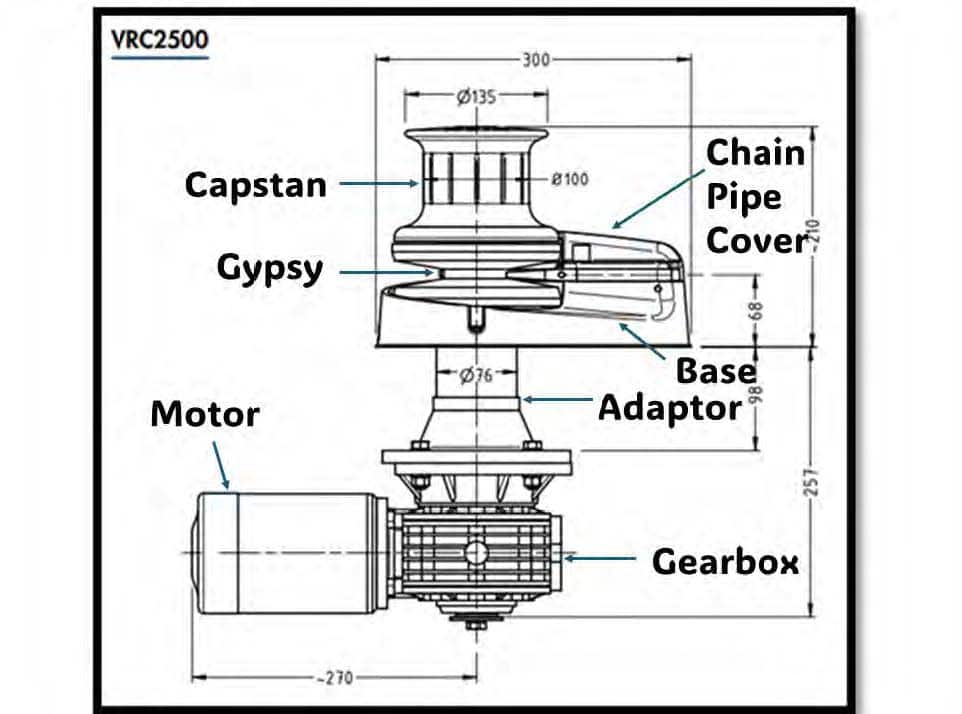
Capstan/Warping Drum
A capstan option is generally mounted above the chain gypsy on a vertical winch or on the other side of a horizontal winch. This is provided for pulling rope during mooring processes or second anchor deployment. It is shaped concave, with a knurled finish for rope grip. Most capstans can operate independently of the gypsy.

Gypsy
The chain wheel (European), Wildcat (American) or Gypsy is a pocketed sprocket that grips the chain. The gypsy is generally detachable from the drive shaft via a cone clutch (for smaller sizes up to 35m boats) or dog clutch (for super yachts above 35m). Once the gypsy is declutched it allows the anchor to free-fall into position and allows the capstan to be operated independently.
It is imperative that your gypsy is matched to your chain and there are many different types of chain, especially in various different countries. Make sure you give your anchor winch supplier (Muir!!) an accurate description of the type and size of chain you have.
Winch Sizing and Required Pulling Power
An anchor winch is sized to lift the total length of your chain plus the anchor (plus a safety factor of at least 20%), assuming that it is possible that somehow all the chain and anchor could be let out (deliberately or by accident) in deep water and the winch must be able to wind it all back in.
The winch IS NOT designed to hold the boat in a gale while anchored and you must use snubbers, bridles, and/or chain locks to achieve this.
Your winch supplier, Muir can advise you on the winch selection based on your boat size, displacement, and chain and anchor weights.
Safe working capacity of Windlass
The actual power requirement for your winch can be calculated by multiplying the chain speed by your maximum load as calculated above (all chains plus the anchor weight). Of course, electric motors can be fairly inefficient (say 70%) plus gearbox efficiency and other losses means that multiplying by at least two times over your anchor and chain load is desirable.
Again, your anchor winch supplier Muir can advise you on motor power which will often come as standard given the actual winch size selection.
If in doubt, select the bigger stronger winch model so that you can be sure of capacity when you need it. Often some of the boat suppliers will select a minimal sized winch on their production boats (for cost reasons) and these can be marginal in capacity.
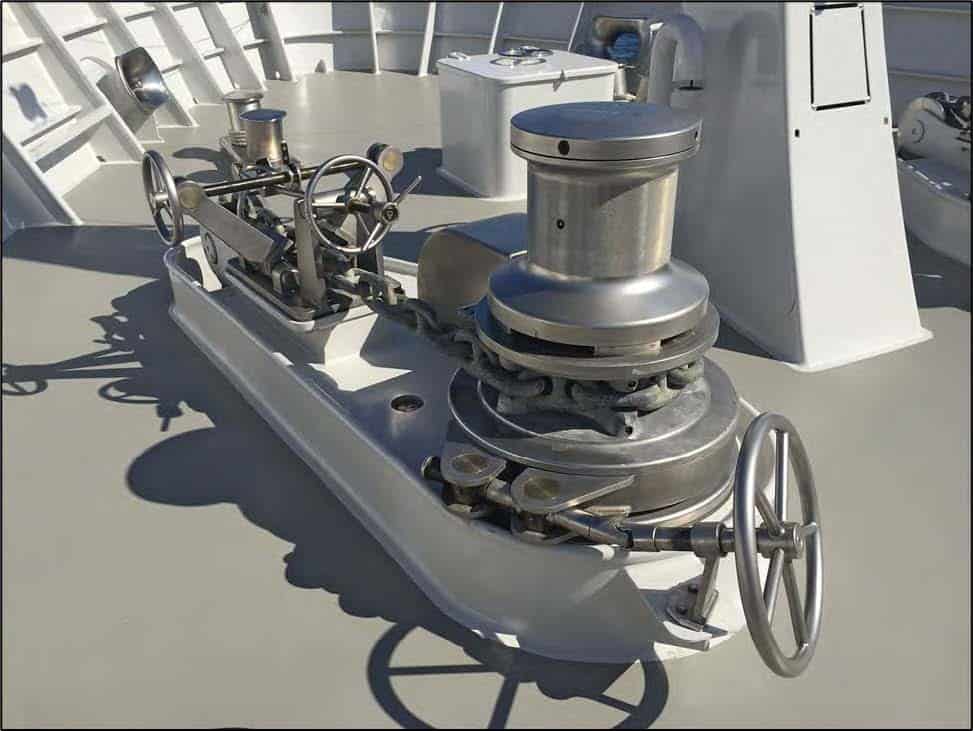
2013: VRC 21000 Hybrid Winchesin a beautiful satin finish on board Piriou Explorer Yacht MY Yersin
Circuit Breaker
It is essential to protect the windlass electric motor and cabling from prolonged overload causing overheating and, in some cases, fire.
Muir will provide a suitable circuit breaker for your winch.
Having the breaker too small (for current protection) can cause unnecessary tripping when you need your winch to work.
Power supply
Make sure you are aware of the length of your cable runs when considering where your battery should be located, ideally close to the winch. On larger vessels, 24v is preferred for minimizing cable sizes. Shorter and heavy leads will help minimize voltage drop. Running your engine while operating your winch can help maintain battery charge. An isolation switch should be installed for when the windlass is not in use.
Chain Stopper
A good idea is to fit a chain stopper, especially on larger vessels because it is essential to remove load from windlass while at anchor.
Chain Counter/Auto Anchor
A chain counter is a very useful optional accessory. It works by having a magnet mounted in the gypsy which passes a sensor mounted on the winch, such that when the gypsy rotates, it triggers a signal giving the number of revolutions of the gypsy when lowering or raising the anchor.
Muir also supplies anchoring control devices (mounted or remote) which will give a readout of the length of the chain based on the number of revolutions of the gypsy and its chain wheel/gypsy pitch circle diameter
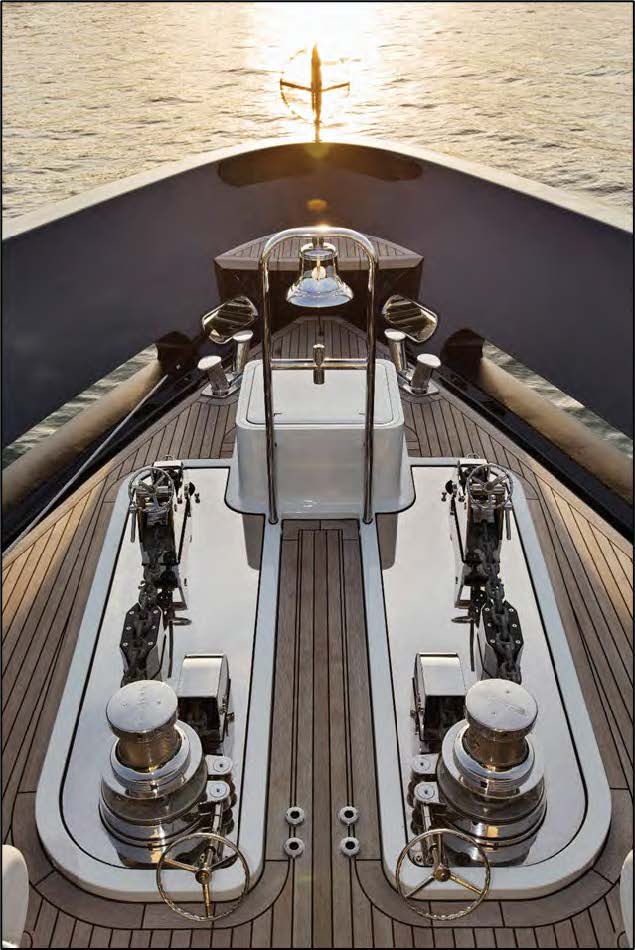
2014: VRC 11000s on board Alloy Yachts Hey Jude
STANDARD PRECAUTIONS
Steps to Consider
- DON’T use the windlass to pull the boat up to anchor. Motor or sail until the chain is almost vertical. Then use chain stopper or a snubber line and motor or sail out a well-bedded anchor.
- NEVER leave a windlass exposed to the potentially high loads at anchor. Use a snubber line or chain stopper or take the chain to a bollard.
- MAINTENANCE. At end of cruise, or at reasonable occasions during long cruises, wash down the windlass with fresh water and dry off. Spray below-deck drive gear with corrosion inhibitor and wrap with Denso tape or similar. (see glossary)
- Dismantle the winch annually and check gear-box oil levels and top up if required, grease moving winch parts (especially the shaft) and inspect parts for wear.
Check your Muir manual for service requirements. Inspect electric wiring 3 monthly.
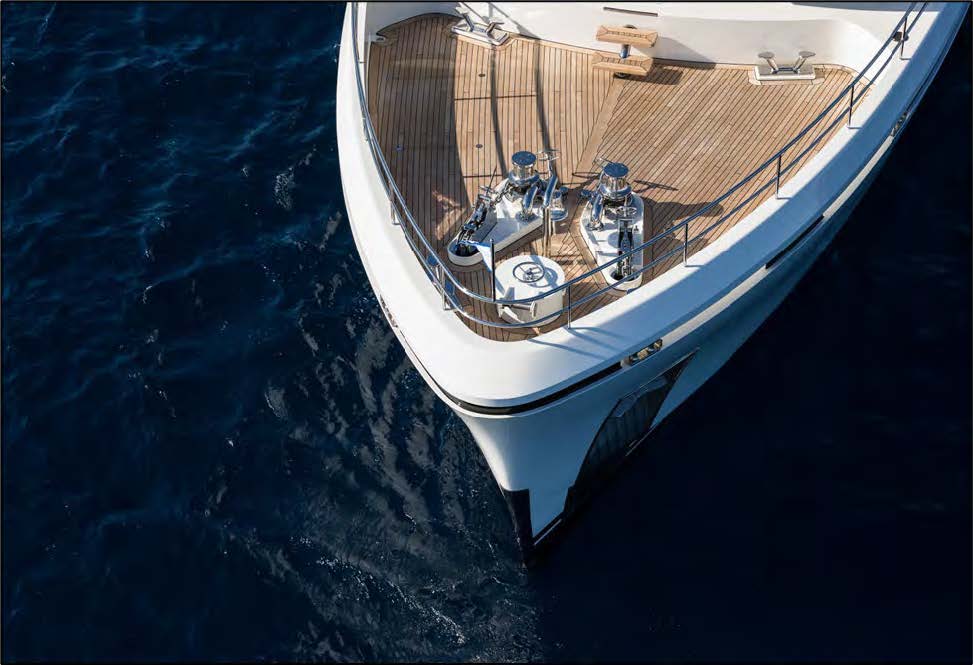
2018: VRC 8000s on board Moonen Martinique 122 Series
GLOSSARY
Bitter End: The Bitter End is the end of your chain or rope which is ultimately attached to the boat so that you don’t lose your anchor and chain.
Bridle/snubber: A rope that can be attached to your anchor chain to take a load off your winch. It also makes for quieter and less jerky anchoring overnight.
Bommie: A coral head sticking up from the natural bottom which can range in size and be a potential hazard both due to depth and interference with your anchor line.
Capstan: The rope winding drum mounted on top (or on the side) of your winch used to wind mooring lines etc.
Denso tape: Denso tape is a cold applied anti-corrosion and sealing tape based on a synthetic fabric, impregnated and coated with a neutral petrolatum compound.
Fetch: The distance wind and swells (or waves) travel across the sea from a shore to reach your boat location.
Foul ground: Bottom conditions affected by rubbish, wrecks, or other material on the bottom which will interfere with safe anchoring.
Gypsy: The chain wheel which winds your anchor chain and sometimes up or down.
Rode: A word that describes your anchor line and applies to all types of anchor lines or cables, either chain or rope.
Kedging: Using your anchor and rode to pull a grounded boat into deeper water.
Mousing: Securing the pin of your shackle by tying it through the eye using stainless wire, or strong rope.
Samson Post: A very strong post mounted on the foredeck of a vessel to which towing, or anchor lines can be fastened.
Scope: The length of rode, from boat to anchor.
Thimble: Metal insert, with a concave outer surface, Rope end passed around and spliced back into self.
Tripping Line: Line attached at the head of an anchor, to pull it out backwards when stuck.
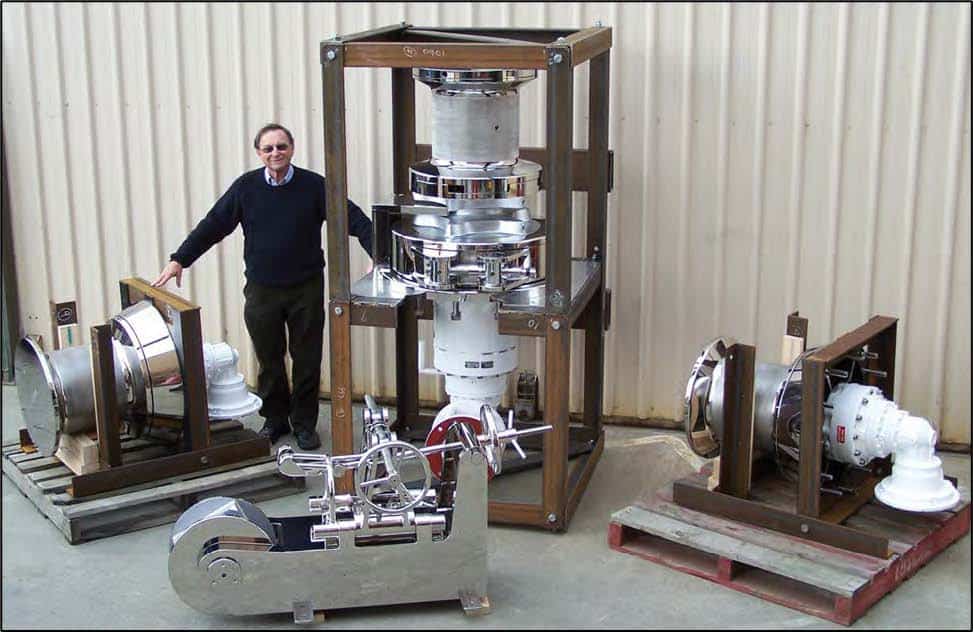
2009: John with Muir’s largest winch at the time, the VRC 24000. Muir can now construct up to a VRC 40000.

2022: VRC 22000 Shipset for the Australian Navy Arafura Class Patrol Vessel