






REFERENCE · A–Z
Anchoring Systems Glossary
The Muir Marine Glossary is your guide to key terms used in anchoring, windlass, and deck equipment systems. Whether you're installing a new windlass, reading a technical manual, or learning more about anchoring technology, this Anchoring Systems Glossary explains essential concepts in clear, practical language. From AMPS to Workload, each term helps you better understand the components, performance, and operation of Muir's world-leading anchoring systems.
GETTING STARTED
How to Use This Anchoring Systems Glossary
Jump to a letter above, or scroll through all 21 terms in this Anchoring Systems Glossary below. Where a term connects to one of our tools or product ranges, we've linked straight through.
AMPS (Workload)
The current draw of the motor when operating at full working load.
Anchor Rode
The line that secures the anchor to the vessel. It may consist of rope, chain, or a combination of both.
Automatic Free Fall
A system that releases the windlass clutch automatically via a remote switch, allowing rapid anchor deployment without manual input.
Bridle
chain stopper
chain compressor
devil's claw
Located between the winch and bow roller, the bridle secures the chain and transfers load away from the windlass.
Capstan
rope drum
A rotating drum used for hauling rope on board.
Displacement
The total weight of water displaced by a floating vessel, typically measured in tonnes.
Fixed Drive
A direct mechanical coupling from the transmission to the gypsy or capstan.
Free Fall
Manual release of the clutch allowing the chain to drop freely under its own weight.
Gypsy
chain wheel
wildcat
chain gypsy
A wheel with pockets designed to grip the chain and/or rope for hauling the anchor and rode.
Hauling
The operation of lifting or retrieving the anchor, rope, or chain; also referred to as weighing.
Hawser
The chain pipe through which the anchor rode passes into the chain locker.
Horizontal Windlass/Winch
A windlass configuration in which the drive shaft, capstan, and gypsy are mounted horizontally to the deck.
Inline Drive
A compact, efficient system integrating the gearbox and motor in a straight-line configuration.
Manual Operation System (MOS)
A manual system in which a handle fits directly into the gypsy after removing the capstan or clutch top.
Manual Override System (MORS)
A manual system allowing operation by inserting a handle into the windlass top to override the transmission and ratchet drive. Limited powered assistance can still be used.
Maximum Load
The highest load the windlass can safely operate under. Normal working conditions should not approach this limit.
Maximum Line Speed
The fastest speed at which the anchor rode can be retrieved.
Ratchet Drive
An indirect drive system coupling the transmission to the gypsy or capstan through a ratchet cone, allowing both powered and manual operation with partial power assistance.
RCMS (Rope Chain Management System)
A system that manages the transition and storage of rope and chain during anchor retrieval.
Vertical Windlass/Winch
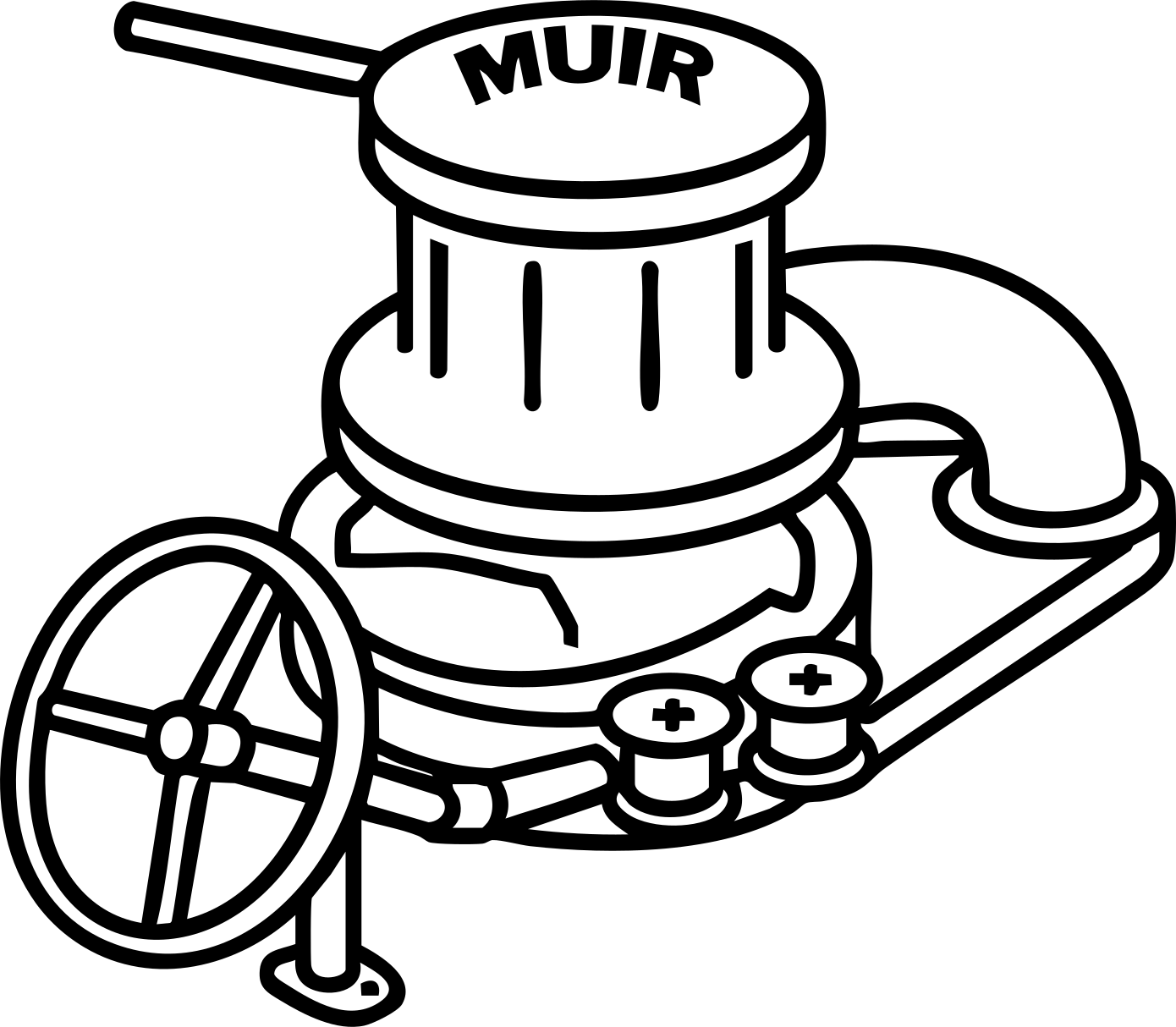
A windlass configuration where the drive shaft, capstan, and gypsy are positioned vertically through the deck.
Workload
The typical lifting load during normal operation, usually around 25% of the maximum load rating.
KEEP GOING
Related Anchoring Guide Resources
That covers the core tools in this Anchoring Systems Glossary cluster — use whichever matches what you're trying to solve.
COMPARE TERMS
Anchoring Systems Glossary FAQs
Two related terms from this Anchoring Systems Glossary often get confused — here's how they differ.
What's the difference between a Gypsy and a Capstan?
A gypsy has pockets designed to grip chain and rope for hauling the anchor rode. A capstan (rope drum) is a rotating drum used purely for hauling rope — it doesn’t have the chain-gripping pockets a gypsy needs.
What's the difference between Free Fall and Automatic Free Fall?
Free Fall is a manual clutch release that lets chain drop under its own weight. Automatic Free Fall releases the clutch via a remote switch, allowing rapid anchor deployment without manual input at the windlass.
What's the difference between MOS and MORS?
MOS (Manual Operation System) uses a handle that fits directly into the gypsy after removing the capstan or clutch top. MORS (Manual Override System) inserts a handle into the windlass top to override the transmission, and can still use limited powered assistance.
What's the difference between a Vertical and Horizontal Windlass?
A vertical windlass has its drive shaft, capstan and gypsy positioned vertically through the deck. A horizontal windlass mounts the same components horizontally on the deck surface.
Can't Find a Term?
If a term from this Anchoring Systems Glossary isn't listed here, get in touch — our technical team can help.
ASK OUR TEAM