






Hot Blog

Muir “Built to Last” Promise

Muir VR2200 Windlass Upgrade: A Real-World Install Story
Why Anchoring System Layout Deserves Greater Design Attention

Muir Wins Innovation of the Year 2026
40% Smaller. Just as Powerful. Redesigning the Horizontal Superyacht Windlass.
Installing Our New Test Bench
How Muir is Redefining Anchoring for the Next Generation of Superyachts
Muir Factory Tour: With Slim & Soph Sailing Nakama

Muir Winches: Built To last

Muir G50 Anchor Chain
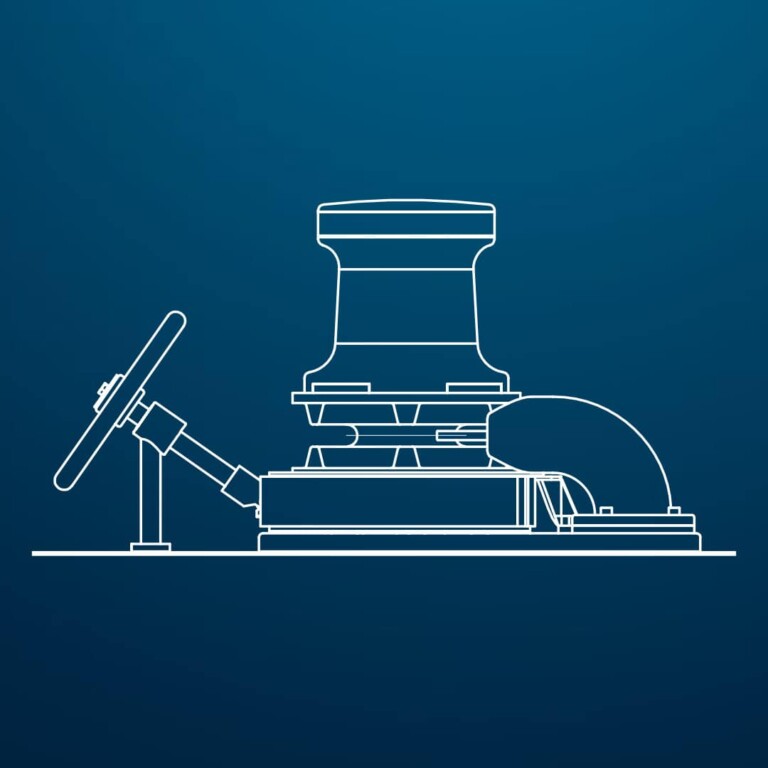
Ensuring Maritime Safety: A Deep Dive into Anchor Windlass Braking Systems with Muir’s Max Buckley
The maritime industry, particularly in the context of recent disasters, continues to place paramount importance on the safety and reliability of all onboard equipment and systems. Ensuring the controlled deployment and retrieval of an anchor is fundamental to vessel security and crew safety and this relies on the effective function of the windlass and chain stopper.

“Max Buckley and Andrew Buckley, or Muir Anchoring Systems, next to a 32mm Windlass and Mooring Capstan for one of the World’s leading Dutch Superyacht Yards”
To explore these crucial aspects of maritime safety, Max Buckley, General Manager here at Muir Anchoring Systems, joined us from our headquarters in Tasmania, Australia where we craft the world’s most robust and reliable Windlasses and Chain Stoppers!
Max, for many, an anchor is simply what stops a boat and a windlass and stopper another set of appliances. But from an engineering and safety standpoint, could you tell us a little more about the importance of the complete anchoring system in safe vessel operation?
“You’re absolutely right; reliable anchoring is more critical to safety than most realise. In challenging conditions – say, inclement weather or major storms – a robust and properly engineered anchoring system is often the primary defence against potential disasters like grounding or collisions.
The windlass, for instance, isn’t just about convenience; it’s a critical tool that allows the crew to safely and efficiently retrieve the anchor when it’s time to move, or to quickly deploy it when needing to hold position.
Then you have the chain stopper, which plays an equally crucial role. It’s engineered to transfer the extremely high loads exerted by the anchor and rode – forces that can be immense in heavy seas – directly and safely into the vessel’s hull structure. These two systems are handling the dynamic and static management of the anchor and rode, respectively. So, every component within these systems, from the smallest grub screw to the largest casting, must be meticulously designed, manufactured, and tested with these demanding operational loads and, ultimately, the safety of everyone onboard, firmly in mind.”
Given the importance of that robust design, the safe and effective operation of these systems by the crew is equally critical. For the windlass, what are some of the most common oversights or challenges you see crews facing when it comes to operating its braking system effectively?
“That’s a great starting point. Whilst crews are generally well-trained with anchoring systems because of frequency of use, the dynamic environment of anchoring can present challenges. A common oversight can be an inconsistent or jerky application of the brake, often due to underestimating the forces involved or perhaps a lack of familiarity with a specific system’s response. Another challenge is ensuring that all preliminary checks are followed before the anchor is let go. Our partners at TBS Marine in Italy, experts in Marine systems in their own right, recently provided an excellent visual demonstration of smooth, controlled brake handling on a Muir VRC15000, which really underscores the ‘art’ of proper application. It’s this finesse, combined with procedural discipline, that really enhances safety.”
Could you walk us through the correct procedure, particularly for freefall lowering, to ensure both safety and equipment longevity?
“A precise freefall lowering procedure is vital, always referencing your specific equipment manual. Key steps on a Muir system with a positive lock dog clutch system to reduce slippage of the Gypsy include:
- First, engage the clutch drive, referring to your windlass manual for the correct method.
- If the devil’s claw was engaged, release it.
- Next, loosen the brake band by turning the brake handle anti-clockwise.
- Then, release the load on the chain stopper. This is typically done by briefly powering the windlass up. (However, in a power loss scenario, you’d use the devil’s claw to pull in the chain slightly to achieve this instead).
- Once the load is off, disengage the stopper pawl(s).
- Crucially, apply the brake before attempting to disengage the clutch and lower the anchor in free wheel.
- With the brake applied, disengage the gypsy – usually by rotating the clutch assembly/ nut/ handwheel anti-clockwise until the dog clutch is fully cleared. Then, proceed to lower the chain and anchor by slowly releasing the brake, using it to meticulously control the rate of descent.
- Once the anchor is set at the required rode length (considering anchorage depth and conditions), the chain stopper is to be immediately engaged to take the load off the windlass.
- Finally, with the chain stopper secure, tighten the brake band as a second line of defence. Adhering to this sequence methodically ensures control, safety, and minimises equipment wear.”
Beyond the lowering procedure itself, what are the absolute ‘must-dos’ or critical safety principles when applying and using the windlass brake, especially considering the warnings one often sees with such powerful equipment?
“Absolutely, two safety principles are non-negotiable. First, always apply the brake smoothly and in a controlled manner, much like a car brake. We can’t stress enough that aggressive ‘on/off’ use can cause dangerous chain whip and lead to severe injuries – it truly is about finesse and firm control, not brute force.
Second, the chain stopper is critical. Never attempt to set or break out an anchor relying solely on the windlass brake. The chain stopper is designed for static and shock loads; the brake is for dynamic control during deployment and retrieval. Ignoring this crucial difference risks catastrophic failure. And, of course, make sure you inspect and maintain your system on a regular basis!”
Moving from operation to design, windlass brakes are subjected to immense forces. What are the most concerning failure modes you see in conventional brake designs and the potential consequences?
“Indeed, the forces are substantial. A Muir 32mm stud link chain brake system, for example, is designed hold around 40 Tonnes, and the associated chain stopper around 70 Tonnes. In conventional band brake designs, we see a few primary areas of concern. Firstly, the failure of the brake band actuation system – that’s the mechanism allowing the operator to clamp the band around the drum. If this fails, you lose control leading to what we describe as uncontrolled freefall and what you often see YouTube videos of. Secondly, failure of the brake band retainer system, which is what transfers the torsional load from the brake band to the ship’s structure to arrest the anchor’s fall. Thirdly, there’s the failure of the wear interface between the brake band and drum.
Any of these failures can result in an uncontrolled fall of the ground tackle. This can lead to extremely high windlass rotational speeds and the violent discharge of the ship’s chain, creating significant fire and projectile risks for any personnel in the vicinity. It’s a scenario we work to prevent through robust design.”
Given those potential risks, what is Muir’s core philosophy when engineering the braking mechanisms for your windlasses, especially the larger systems like the VRC6000 and above?
“Our core philosophy is centred on ‘inherently safe design.’ Whilst effective maintenance regimes can mitigate wear interface risks, failures in the actuation and retainer systems require a more fundamental engineering solution. For our mega-winch projects, like those VRC6000s and larger, the Muir proprietary brake system is engineered from the ground up with risk mitigation at its heart.
Our primary design goals are twofold.
Firstly, to drastically reduce the risk of the actuation system failing or becoming disconnected from the brake band.
Secondly, to reduce the risk of the retainer system failing or disconnecting from the base assembly, which ultimately transfers the load to the ship’s structure. Every component and interface is scrutinised to achieve these goals.”
That emphasis on inherent safety is clear. Could you give us a couple of specific examples from Muir’s brake design where components have been engineered to mitigate these failure points directly?
“For sure! Let’s look at the brake shaft and handwheel assembly. Our design features a captive handwheel held securely against a machined shoulder on a large diameter shaft. This means that even if the securing bolt and washer were somehow lost, the handwheel remains functional due to this machined shoulder. The drive is through a captive key, ensuring positive engagement even if this bolt is lost. Obviously if this bolt and washer was lost, reach out to us ASAP so we can get you some replacements!

“The handwheel and brake nut of a VRC11000 braking system”
Another example is our use of bronze brake nuts with three levels of redundancy to prevent complete unwinding or loss of the brake shaft. These are installed captive within welded brake nut lugs and secured in place with self aligning washers or stainless steel circlips, whilst other systems rely on a single bolt to retain the brake nuts. The bronze material is chosen to reduce the risk of binding with the stainless-steel shaft, ensuring smooth actuation. Importantly, the shaft is designed to ‘pull’ the free end of the band towards the fixed end, which is further fixed in place by a brake shaft retaining collar and a lock nut and washer on the end of the shaft. Each of these three features independently prevent an operator from accidentally unscrewing and disassembling the actuating shaft whilst operating the brake – a subtle but critical safety feature employing the proven concept of redundancy!”

“The captive brake nuts, brake shaft collar and heavy duty brake lugs of a Muir VRC22000”
You also mentioned the retainer system. How does Muir ensure that critical connection point remains secure?
“The brake band retainer or lug or block which holds the brake in place and transfers the load to the windlass base, is another area of focus. In our design, it’s welded permanently to the brake band itself. Furthermore, it’s designed to ‘float’ within the peeler upright or the windlass base block which are superior connection methods to single bolted systems, or systems bolted direct to the deck. This floating design allows the brake band to move freely in the vertical plane, self-aligning with the drum. This not only ensures even pressure and optimum braking efficiency but also prevents unintended constraints caused by misalignment or stress concentrations that could otherwise compromise the retainer system or the band itself over time.”

“The handwheel shoulder, captive key and handwheel end washer and bolt of the Muir braking system”
It sounds like a comprehensive approach to a critical system. What is your outlook on the evolution of these safety features and anchoring systems in general?
“The maritime industry rightfully demands continuous improvement in safety and reliability. Whilst the foundational principles of robust mechanical engineering will always be central, we are constantly evaluating material advancements like new brake lining material, enhanced ergonomics for easier and safer operation, and smarter integration with overall vessel management systems. The trend is definitely towards systems that are not only powerful and durable but also incorporate more layers of inherent safety, are simpler to maintain correctly, and more intuitive for crews to operate under all conditions. Muir is committed to being at the forefront of this evolution, driven by the non-negotiable priority of vessel and crew safety.”
Experience Enhanced Safety with Muir Anchoring Systems
“Make sure the winch you design and build is stronger than the deck it’s bolted down to” Jock Muir, John Muir’s father.
Muir is dedicated to providing the maritime industry with cutting-edge anchoring solutions where safety and reliability are paramount. Trust in our decades of expertise and innovative design to ensure peace of mind on every voyage.
For any queries about Muir’s advanced braking mechanisms or other anchoring solutions, please do not hesitate to get in touch. Muir Engineering | Kingston | Tasmania | Australia P +61 (0) 362 290600 | E: sales@muir.com.au | W: www.muir.com.au
(And for a practical demonstration of smooth brake application, Readers are encouraged to watch the video by TBS Marine, showcasing a VRC15000 Muir Windlass in action. )