



Hot Blog

Muir “Built to Last” Promise

Muir VR2200 Windlass Upgrade: A Real-World Install Story

Why Anchoring System Layout Deserves Greater Design Attention

Muir Wins Innovation of the Year 2026
Installing Our New Test Bench
How Muir is Redefining Anchoring for the Next Generation of Superyachts
Muir Factory Tour: With Slim & Soph Sailing Nakama

Muir Winches: Built To last

Ensuring Maritime Safety: A Deep Dive into Anchor Windlass Braking Systems with Muir’s Max Buckley

Muir G50 Anchor Chain

40% Smaller. Just as Powerful. Redesigning the Horizontal Superyacht Windlass.
Overview
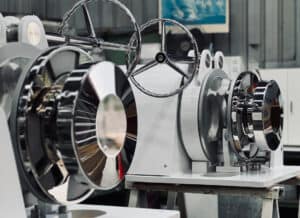
Muir Anchoring Systems has developed a horizontal planetary drive winch that fundamentally reimagines how anchoring systems are integrated into modern superyachts and leisure vessels delivering a level of compactness, flexibility, and smart functionality that has no direct equivalent in the global marketplace.
The challenge
Brought into sharp focus by one of the world’s most prestigious superyacht builders, who faced a specific problem: a critically tight space between the vessel’s wing doors and the windlass, where a traditional helical gearbox windlass simply could not fit without compromising access, safety, and operability. As vessels have grown in sophistication and compactness has become a premium design value, Muir’s engineering team recognised that the anchoring category had not kept pace. Rather than adapt existing designs, Muir committed to a ground-up engineering process collaborating directly with naval architects, OEMs, and shipyard partners to ensure the system could meet class compliance requirements across a range of vessel configurations from 30 to 150 metres.
Our Solution.
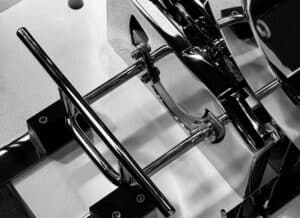
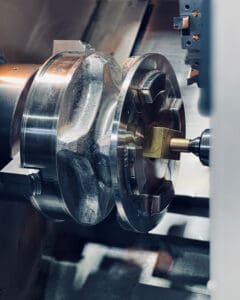
Muir’s horizontal planetary drive winch eliminates that trade-off entirely, By engineering the chain stopper, windlass, and chain wheel into a single, unified base plate, we reduce the system’s overall footprint by up to 40%. The modular drive train layout combined with a planetary gearbox (a category first) is more compact and lighter than conventional helical alternatives, while the use of an industry-standard off-the-shelf gearbox means spare parts are readily available through Muir’s global service network, reducing vessel downtime. With a fully integrated chain stopper on the base plate, component count is reduced, which means less to service and fewer potential failure points. This is not an incremental improvement it is a structural rethinking of how an anchoring system occupies a vessel. The freed deck space translates directly into design freedom for shipyards and owners, while simplified installation reduces build time and long-term maintenance costs.

Conclusion
Our collaborative approach has delivered measurable results. The system has been specified and installed by world-leading builders and critically, that same major shipyard partner, having taken delivery of the HR20000 and integrated them into a completed build returned to place a second order for a larger system in the same design. In the superyacht industry, where builder trust is earned through performance and precision, repeat business from the same yard is among the strongest possible validation.
For Muir, this innovation is central to a long-term strategy of leading the superyacht anchoring category through engineering differentiation rather than price competition. With over 55 years of marine experience and a growing global service network, Muir is positioned to scale this technology across new build programmes worldwide setting a new industry standard for what integrated anchoring should look like.